
How Do You Write a Letter from the Heart Someone Will Treasure Forever?
Sep 09, 2026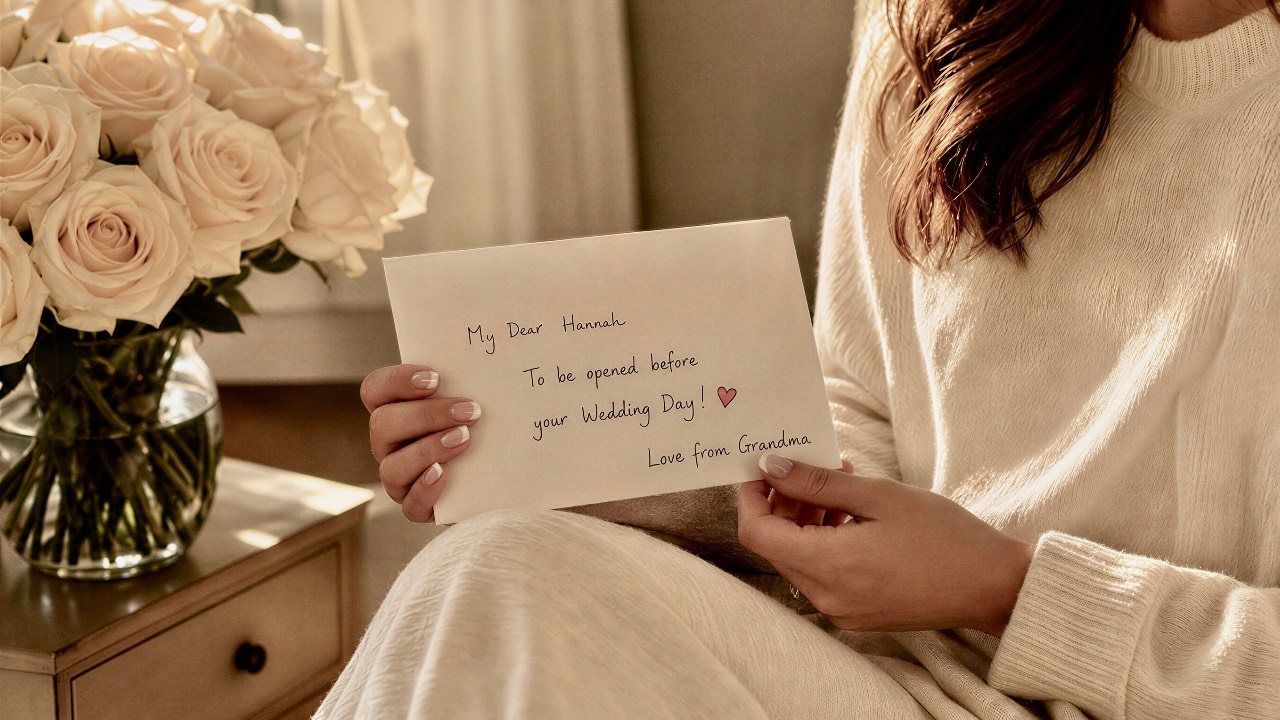
"Let us never underestimate the power of a well-written letter."
— Karen Joy Fowler, The Jane Austen Book Club
Imagine someone being given a letter that was intended for them that they had no previous idea existed. Maybe it was carefully placed inside a special box that hasn't been opened in years, or perhaps it sat with a collection of others in a safety deposit box. The name on the envelope might be in handwriting they instantly recognize, or handwriting that's completely unfamiliar. Whatever the moment, however many years in between, whatever the writing, something happens the instant they realize: this was written for me.
Perhaps the following scene unfolds. They sit down, wherever they happen to be standing. The rest of the room goes quiet. And for as long as it takes to read, the person who wrote it is there again, not as a memory being reconstructed or a person being preserved, but as a voice, speaking directly, in their own words, about something that mattered enough to put on paper, directly for them. Or perhaps they are handed this envelope and carefully and thoughtfully wait for just the right moment and environment to open and read this gift.
That is the particular power of a letter from the heart. It is a direct address to someone you love, reaching across whatever time separates the writing of it from the reading of it. And it may be one of the most accessible, most immediate ways to begin building your inner wealth legacy because it is a simple way to start. It only asks you to say one true thing, to one person, as clearly and as wholeheartedly as you can.
What Makes a Letter from the Heart Different from a Life Story
Your Life Stories collection is built to include the stories that shaped you, the wisdom you gathered and the moments that mattered. A letter from the heart works differently. It is addressed to someone specific, like a grown child, a grandchild, or a future spouse of a grandchild not yet born. It doesn't try to speak to "whoever finds this." It speaks to you directly, the way you'd speak if that person were sitting across from you. It makes it personal and connective.
It can also often be anchored to an occasion, like a milestone birthday, a graduation, a birth, or a wedding. Imagine being handed a note from your great-grandmother the day you gave birth to your first child. Or a letter can simply be written for "whenever you need to believe in yourself," or other sentiments, with no occasion attached at all beyond the writer's own sense that the moment had come to capture and to write these loving words.
And where a Life Stories collection grows over months or years, one story added to the next, a letter from the heart is usually shorter and more concentrated. One letter carries one core message. It doesn't need to capture everything, because it isn't trying to. It's trying to hold one true thing well enough that the person reading it feels held by it.
Types of Letters from the Heart Worth Considering
There isn't only one way to write a letter like this, and knowing the different options available often makes it easier to begin.
The "Open When" letter is probably the most familiar. It's written now, for someone already in your life, and set aside to be opened at a defined future point, like when they turn ten, when they turn eighteen, when they move away from home, when they get engaged, etc. Give it a title and mark the date it's meant to be opened, so whoever holds it knows exactly when. There is something quite remarkable about writing to a person you love today, for a version of them still waiting to arrive. You're not guessing at a stranger's life. You're picturing someone you cherish a little further down the road than they are now and speaking directly to them. A grandparent might write to a six-year-old grandchild about the day they'll graduate, with no way of knowing who that child will have become by then. Describing who they are right now, at six, whatever they love, find funny, or believe in, makes the letter an instant connector and deeply intriguing to someone reading about their younger self.
Closely related is the letter, or card (more on this option a bit later) to descendants not yet met, written with no specific name attached, for whoever comes after you. It's a different kind of writing than the "Open When" letter, because you aren't picturing a particular face. You're picturing a lineage. Someone, someday, who will exist because you did, who may never know you any other way. Writing this one takes a particular kind of generosity, because you're not writing to someone you already know, in the ordinary sense. You're extending love in advance to someone you haven't met, simply because they'll be family, whoever they end up being, whether born into, married into, or loved and folded into the family. Name it too, so whoever eventually holds it knows exactly what they're holding, even without one specific date attached. A few ideas to consider:
- To Whomever My Grandson Marries
- For the Little Family Member Not Yet Born
- To Whomever Loves My Family Someday
- To the Newest Branch of This Family
And since families grow, spread out, and sometimes drift apart, and since there may eventually be many descendants to reach, it's worth considering more than one copy, whether that means one for each branch of the family or several copies passed down through different lines, so this kind of letter, or card, has a real chance of finding its way to whoever it's meant for.
Then there's the blessing letter, which doesn't need an occasion at all. It exists simply to say: I love you, I'm proud of you, and here is what I hope for you.
The explanation letter takes on something the writer wants understood in their own words: a decision, a choice, a chapter of life that might otherwise be misunderstood by the person who wasn't there for it.
And the gratitude letter does something we rarely do fully out loud. It names, in vivid detail, what someone has actually meant to us. Not "thank you for everything," but the specific things. The particular ways they showed up. The details some people never get told while they're alive.
None of these categories are fixed rules. Some of the most treasured letters end up being a little of everything at once, a blessing that turns into an explanation, a gratitude letter that becomes, by its final line, something closer to a benediction. The categories exist to help you find a door in, not to box you into one format.
What If You Don't Know What to Say?
This is sometimes where people get a bit stuck — not because they don't love the person they're writing to, but because the moment they sit down, everything they might say suddenly feels either too small or too big. Too small: a memory that seems almost silly to write down. Too big: an entire relationship they don't know how to summarize in a page.
Here's the reassurance worth holding onto. You are not trying to capture the whole of anyone, including yourself. A letter from the heart succeeds by doing mainly one thing, not everything. If you find yourself stuck, try answering a single question.
- What do you want this person to know about the day they were born?
- How did you feel the day you met them?
- What do you most admire about who they are?
- If you could sit beside them on their hardest day, what would you want them to hear?
- What is something they did for you that still warms your heart?
Any one of these questions, answered from the heart, is already most of a letter. Whatever you choose becomes its center, the one true thing everything else builds around.
What's a Simple Structure to Follow?
If you're staring at a blank page, here is a structure simple enough to actually use.
Start with the opening, naming why you're writing this, and when you expect them to read it. One technique worth trying here is to anchor the letter in this exact moment — who the person is right now, their age, their current obsessions and quirks — even naming, plainly, that they may have grown past all of it by the time they read the letter. Try this: Right now, as I write this letter to you, you are five years old and obsessed with sparkly pink. So, I'm adding some of that into this letter, even though by the time it reaches you, you may have completely outgrown it. Something in your heart may still tug back to those memories, though.
That kind of present-moment specificity becomes its own bridge across time. The specific detail itself, the sparkly pink obsession of a particular age, may no longer fit who they've become. But the feeling underneath it, the fact that someone loved them enough to notice and remember exactly who they were at five, tends to land regardless of what they've grown into.
From there, move into the middle. This is where whatever you chose from those five questions, or whatever else feels like the true heart of what you want to say, becomes the center of the letter, told through a specific memory or image rather than a general statement. And close by naming what you hope for them, with the same genuine feeling as everything before it. You don't need transitions between these three parts. You don't need to impress anyone. You need one true thing, told well, from someone who loves them enough to write it down.
What Makes a Letter from the Heart Actually Land
This is where details do the actual work. Here's what that looks like in practice.
Before: "You've always been such a kind person."
After: "I remember when you were nine and you gave your only umbrella to a classmate at the bus stop and walked home in the rain because you didn't want her to get soaked and you never once mentioned it to me; I only found out because her mother called to acknowledge your thoughtfulness and kindness."
The first sentence could describe almost anyone. The second could only be about one specific nine-year-old, on one specific afternoon. It tells the reader something the first sentence never could — not just that they are kind, but how their kindness actually moves through the world when no one is watching.
If you know who you're writing to, use their name, and draw on the things only they would recognize — the joke that only the two of you find funny, the anticipation of eating a certain dish, the year everything became difficult and they didn't realize you noticed.
If you're writing to someone you'll never meet, the same idea still applies, just aimed differently. There's no shared memory to reach for, so draw on one specific moment from your own life instead — a certain afternoon, a decision you actually made, a conversation you can still hear. Concrete beats general either way, no matter who ends up reading it.
One important suggestion is to resist the urge to summarize a whole relationship, or a whole life, in one letter. You don't need to say everything. Let the letter do one thing well, and trust that the detail of that one thing will mean more than an attempt to vaguely cover it all ever could.
Sometimes a Card Says Enough
A card can offer the same easy entry point as a letter, sometimes even easier, since the format itself already feels smaller and less demanding than a blank page. One caution is worth naming here, though. This project is meant to hold your own voice, not someone else's. So, a card tends to work best in one of two ways.
The first: write it yourself, entirely. A blank card, whether plain or decorated on the front, gives you the same freedom as a letter, just in a smaller, friendlier shape. For some people, a small blank space feels far less daunting to fill than a full page, which makes it a gentle way to begin. For those who like the idea of a blank card but aren't sure what to write, one option is to choose a favorite quote of yours and add it on the inside as a launch point you can build on. And if a more creative approach appeals to you, there's a whole section on that just ahead.
The second: find a card that does have writing, but look for one with just a short sentiment or a few lines that resonate deeply and say exactly how you feel, then build on it yourself. The key word here is deeply. Not a card filled with multiple verses on both interior sides, already saying everything for you, but one that hands you a true opening line you can pick up and carry forward yourself.
Either way, a card is certainly not a shortcut just because it is shorter. It carries your heartfelt message. It's simply a smaller container for it, and one that might make it easier for someone who has never done anything like this before to actually begin.
Creative Ways to Write a Letter from the Heart
Of all the forms a Life Stories legacy can take, a letter from the heart may be the most flexible, because it can be as simple or as artful as the person writing it wants it to be, and neither is more valid than the other.
For some people, simply getting the words down is the whole goal. There is nothing missing from a letter that is only words on a plain page. The words are the gift.
But for those with an artistic flair, a letter can become something different. Special paper chosen just for this. A hand-drawn sketch in the margin. A photograph tucked inside the fold. For some, it becomes something closer to a scrapbook page than a letter at all, layered, textured, something to be held as much as read. Permanent markers, colored ink, stickers strategically placed. All of it is fair game for someone who wants the letter to feel handmade. There is something particularly moving about receiving a letter that clearly took hours to create, not because the words demanded it, but because the person writing it wanted you to feel, in the creation itself, how much care went into it.
There's also a touching kind of creativity worth considering, weaving in a shared connection from childhood. A favorite storybook, a beloved character, a story that held specific meaning between the writer and the person receiving the letter. The way Guess How Much I Love You's Nutbrown Hare might carry a private meaning between a parent and a child who read it together every night for years. The way Peter Rabbit, or Winnie the Pooh, might belong, quietly, specifically, to a particular grandparent and a particular grandchild, in a way no one else would even recognize. Woven into a letter, a detail like that becomes a secret hug across time. There is no wrong way to do any of this. It comes down to what the person's heart tells them they want to craft.
But let's be clear. A plain, unadorned heartfelt letter written in an hour can carry exactly as much weight as one that took a weekend and a full craft table to make. What matters is that the format fits the person doing the writing. Someone who has never described themselves as creative shouldn't feel pressure to suddenly become a scrapbooker because the option exists. And someone who has always expressed love through making things with their hands shouldn't feel like decorating a letter is somehow less serious than a plain page of text. The letter is the vessel. What's inside it is what matters, however that vessel ends up looking.
Why Handwritten Letters Matter
Something surprising happens when people write letters like this. They almost always underestimate how much it will mean. This tracks with a 2018 study led by psychologist Amit Kumar, which found that people writing letters of gratitude consistently underestimate their impact, overestimating how awkward the letter will feel to write, and underestimating how moved the recipient will actually be. The letter almost always matters more than the writer expects.
"What a lot we lost when we stopped writing letters. You can't reread a phone call."
— Liz Carpenter
Somewhere down the line, someone you love is going to have a hard day, or a milestone you won't be there for, or simply a moment of missing you so much it aches. A letter from the heart doesn't erase that ache. But it meets it. It says: I thought of you, even before this exact moment arrived. That is not a small thing. It may be one of the most powerful gifts you can create, and it doesn't ask for much: some paper, your own words, and one person clearly in mind, whoever they are to you.
And there is nothing stopping you from writing more than one. Some of the families we've worked with end up with a small collection of these letters, like one for each grandchild's wedding day, one for a spouse to open on the first anniversary alone, one simply titled, “For whenever you need to hear this." None of them replace a full Life Stories collection, and they don't need to. They do something a longer collection can't; they arrive at exactly the moment they're needed, addressed to exactly the person who needs them, saying exactly the thing that only you could have said.
A question to sit with: If you sat down today and wrote one letter or a card, to one person, about one thing you've been meaning to say, who would it be to, and what would you most want them to know?
If you'd like help and guidance in creating Your True Legacy gift, we are happy to have a conversation, to see whether we might be the right guides to help you get it done!
© 2026 Your True Legacy™ / Part of the Inner Wealth Transfer Movement™