What Does It Mean to Be Among the Last Generations Who Remember Life Before the Internet?
Jul 01, 2026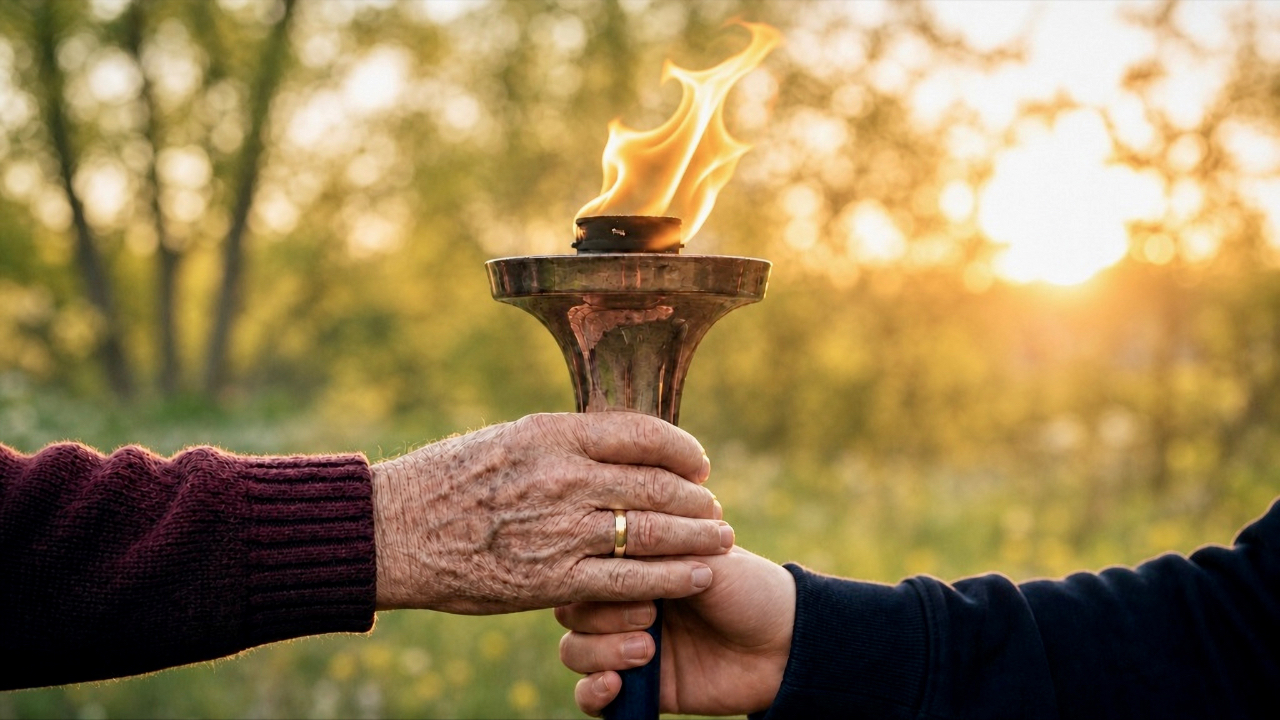
Time used to have a particular kind of slowness. It lived in the back seat of a car on a long drive, in the house on an ordinary afternoon before anyone thought to turn on a screen, and in the patient space between writing a letter and receiving one back weeks later. That slowness and silence weren't empty. They were where a person was alone with their thoughts and their heart, fully inside the moment.
If you are a baby boomer or a Gen Xer who grew up before the internet reached into daily life, you remember that slowness. You may not think of it as remarkable — it was simply how life was. But it is gone now, and it is not coming back. That is precisely what makes it remarkable. You are part of the last generations of human beings who will ever know, from the inside, what it felt like to grow up without a device in your hand.
That is not nostalgia talking. That is a fact about history, and it deserves to be treated as one.
WHAT WAS IT LIKE TO LIVE BEFORE THE INTERNET?
Think about your childhood for a moment — not the facts of it, but the texture of it. The freedom of a summer afternoon with nothing scheduled. The way you had to actually wait for something: a phone call on the only phone in the house, a television show that aired once and was gone. And the way friendship itself worked differently — you couldn't send a brief text, you had to meet face to face to spend time together, playing or just hanging out.
At that time, your attention was not yet a highly coveted product. Nobody was studying your clicks or eye movements to keep you scrolling. When you were bored, you were allowed to simply be — and in that "boredom," without you noticing, your mind was doing exactly what it does when nothing else is competing for its attention: free to wander toward thoughts that were entirely its own.
Your memory worked differently too. You didn't photograph your dinner. You didn't reach for your phone mid-feeling to show someone your grief or your joy before you'd finished having it and processing it. The moment happened first, all the way through, then found its way out afterward: shared over dinner that same night, written down in a journal before bed, retold to a friend at school the next day. Memory, for you, was not a backup file. It was the original — the only copy that ever existed.
This is the texture of analog life: slower, quieter, more demanding of effort, and — though you may not have called it this at the time — more demanding of presence. You couldn't half-attend to a phone call while scrolling through something else. You couldn't like a friendship into place. You had to build it, then tend it, in person. Life required you to be where you were.
WHAT DID THE STILLNESS PROTECT YOU FROM?
There was another kind of protection folded into those quiet spaces, one that is easy to miss now because it was never named as a benefit at the time. Nothing had been invented yet to take that stillness from you.
Your sense of self was built slowly, by the people who actually knew you: a parent's face across the breakfast table, a friend's opinion well developed over years, your own reflection in an actual mirror, seen a handful of times a day, not a version of your own face smoothed and adjusted to match whatever beauty happened to look like that year. No screen was waiting for you before you'd even finished your cereal, already showing you a thousand other lives edited to look effortless. Whatever you came to believe about your self-image, you built it from the inside out, in a world that was largely, blessedly uninterested in offering you constant evidence of everyone else.
Gloria Mark, a professor of informatics at UC Irvine who has spent two decades tracking how technology reshapes attention, has watched this shift happen in real time. In 2004, the people she studied could hold their focus on a single screen for about two and a half minutes before switching to something else. Today that number has fallen to 47 seconds. Every one of those switches, her research shows, costs the mind roughly 25 minutes to fully return to what it was doing before the interruption. Multiply that across a single day, let alone a childhood, and what you get is a mind that is rarely given the chance to settle into a single thought long enough to finish it.
As if that weren't enough, the same screens shrinking your attention were also silently rewriting how people saw themselves. Dr. Jasmine Fardouly, a psychologist who has spent years studying the link between social media and body image, has found that scrolling past a stream of curated photos leads people to measure their own appearance against them almost automatically, and that this kind of comparison is among the clearest drivers of body dissatisfaction researchers have identified. No comment. No like. Just image after image, steadily resetting the bar to something manufactured.
"There is a secret bond between slowness and memory, between speed and forgetting."
— Milan Kundera, Slowness
That is exactly what the stillness protected you from, though you had no word for it at the time. It protected the quiet company of your own mind and heart: the space where a thought could complete itself, where a feeling could be felt all the way through instead of being interrupted by the next four-second clip. And it protected something else, too: the time it takes to wholly become someone, before anyone else's polished image got the chance to quietly reshape how you saw your own — before comparison to a stream of unrealistic fragments belonging to people you had never met became the mirror you measured yourself against.
WHAT WILL BE LOST WHEN THESE GENERATIONS ARE GONE?
Here is the part that we think doesn't get said enough: this is not just a different way of living. It is a way of living that can never be recovered once the people who hold it are gone.
A digital native, someone born into a world already humming with notifications, can read about life before the internet. They can watch documentaries, study sociology, ask their grandparents questions at Thanksgiving. But they cannot have the experience. They cannot retroactively install the patience that comes from waiting for a ride with no way of knowing when it would actually pull up, or the particular resourcefulness that comes from spending an afternoon in a library card catalog to track down one journal article, typing a report on a typewriter where a missed word near the bottom of the page meant starting the entire page over, or the memory that comes from carrying a phone number, an address, a birthday in your own head, with no device there to carry it for you.
This is what we mean when we say your generations carry something genuinely endangered. Not endangered in the sense of an interesting historical footnote — endangered in the sense of: when the last people who lived it are gone, the lived knowledge of it is gone with them. What remains will be second-hand. Researched. Described. But not known, in the way you know it, in your body.
There are things you built without ever giving them a name. The self-reliance that comes from long stretches with nothing scheduled, fixing something with whatever was already on hand, genuine difficulty without a shortcut available. The capacity to sit through an awkward silence and let a conversation keep developing, rather than reaching for a screen the moment it got uncomfortable. These were not taught to you in a classroom. They were forged, slowly, by simply living in a world that did not yet offer you an escape hatch from every hard moment.
When the last witnesses to that world are gone, we don't just lose stories. We lose the only living proof that a different way of being human was once the normal way.
There is a strange asymmetry at work here that we think about often. Every generation before yours that lived without digital technology had no guarantee of anything — not peace, not prosperity, not an easier life for their children. But they could still assume something narrower and more basic: that a conversation would still require two people in the same room, that waiting would still simply be what you did until something arrived. That assumption held through wars, through plagues, through every kind of upheaval, for as long as human beings have communicated with each other. It does not hold anymore. Now the answer is at your fingertips before the question has finished forming. A question that once would have sent you to a library for a week now gets answered by an AI before you have finished typing it. The package is on the doorstep the next morning. The food arrives at your door a short while after a confirm button is pressed. This is instant gratification at a scale no generation before yours has ever known. You are standing at the hinge point. You are among the last generations to have known these as simple facts of life, and, in that very same lifetime, the first to watch them unravel — inside your own family, perhaps at your own dinner table.
WHAT CAN YOU STILL PASS DOWN TO FUTURE GENERATIONS?
Here is the distinction worth holding onto, because it changes everything about what comes next. The feeling itself cannot be handed down. Nobody will ever again know, in their body, what it was to retype an entire page because of one missed word, or to sit in a silent room with nothing but their own thoughts for company. That part goes with you, fully and finally.
But the wisdom that feeling produced is a different thing entirely, and it does not have to disappear with you. Patience, presence, the instinct to sit inside discomfort instead of escaping it — these can still be named, taught, and passed down in story, even by someone who never lived the experience that first taught them to you. Few alive today survived the Great Depression, yet its lessons about thrift still shape families who never touched it firsthand, carried forward by grandparents who told the stories while they still could. This is exactly why your Life Stories matter now, while you are still the one who can translate what you lived into something that outlives the living of it. Not because the telling will let anyone feel what you felt. It won't. But the wisdom is still yours to give, and once you are gone, even the secondhand version disappears with you.
That is an unusual place to stand. What you felt cannot be carried across — no bridge, however well built, moves a feeling from one body into another. No one will ever feel exactly what you felt, in exactly the moment you felt it.
But sharing the feeling, even imperfectly, still connects people, because feeling itself is universal. You do not know whose hands your Life Stories will be held by two generations from now, or what corner of the world they will call home. But wherever they are, whoever they become, feeling still resonates. Love speaks. A message of courage or comfort arrives whole, in any home, in any era, no matter how far it has traveled to get there.
What can be carried, fully and intact, is how you lived: the lessons it taught you, the values it shaped in you, the love underneath all of it, whatever wisdom, encouragement, or strength you most want to hand to the people who come after you. That is what this bridge is actually for.
On one shore is a world close enough to touch, close enough to remember in your own body, and it is receding fast. On the other is a world changing in such mind-blowing ways that it will change the face of the future in unrecognizable ways we are only beginning to understand. Between them, right now, there is nothing but distance, and it is widening every year, in every family. Nobody assigned you the job of connecting these two shores. But you are among the last people alive who have stood on both. You have one foot on one shore and one on the other. That means you are also among the last who can build anything that spans these two worlds.
But you are not the only one building it. Every person who takes even a small step toward capturing a story is laying another plank on this same bridge — a business built to help someone chronicle their memories, a parent who finally writes one memory down, someone who has only begun to think about starting. No one handed any of you this task. You are choosing it anyway, and that choosing, multiplied across enough people, is becoming something larger than any one family: a rising movement, carrying a torch raised high, full of love and light, passed from one hand to the next, from one shore to the other, from one generation to the next, before the flame is gone for good.
It is a bridge of love. From you to the people you love. From one generation to the ones still to come.
A question to sit with: You are standing at a moment in history that will never happen again. So what is one message you would want to pass along before the chance to tell it yourself is gone?
If this resonated with you, we'd love to have a conversation — no obligation — to explore what your inner wealth legacy might look like, and whether we might be the right guides to help you shape it.
© 2026 Your True Legacy™ / Part of the Inner Wealth Transfer Movement™